

The world of finance and technology is rapidly evolving, and in 2026, cryptocurrency and blockchain technology are no longer niche innovations—they are becoming mainstream digital infrastructure. Businesses, governments, and individuals are increasingly adopting these technologies to improve security, transparency, efficiency, and financial access. What began as a decentralized experiment with Bitcoin has now transformed into a global movement shaping the future of payments, contracts, digital identity, and asset ownership.
What Is Cryptocurrency?

Cryptocurrency is a digital asset designed to work as a medium of exchange using cryptography for security. Unlike traditional currencies controlled by central banks, cryptocurrencies operate on decentralized networks, meaning no single authority controls them. This decentralization increases transparency, independence, and global accessibility.
In 2026, cryptocurrencies are used not only for trading and investment but also for cross-border payments, online purchases, smart contracts, and decentralized applications (dApps). Popular cryptocurrencies like Bitcoin, Ethereum, and stablecoins continue to dominate the market while new projects focus on solving scalability and energy-efficiency challenges.
What Is Blockchain Technology?
At the core of cryptocurrency lies blockchain technology, a distributed digital ledger that records transactions across multiple computers. Instead of storing information in one central system, blockchain distributes data across a secure network, making it tamper-resistant and highly secure.
Each block contains verified transaction data linked to the previous block through cryptographic hashing, forming a secure and transparent chain. This structure ensures data integrity, trust, and accountability without the need for intermediaries.
Blockchain is not limited to crypto—it is now used in supply chain management, healthcare records, voting systems, real estate, and financial services.
How Crypto and Blockchain Work Together
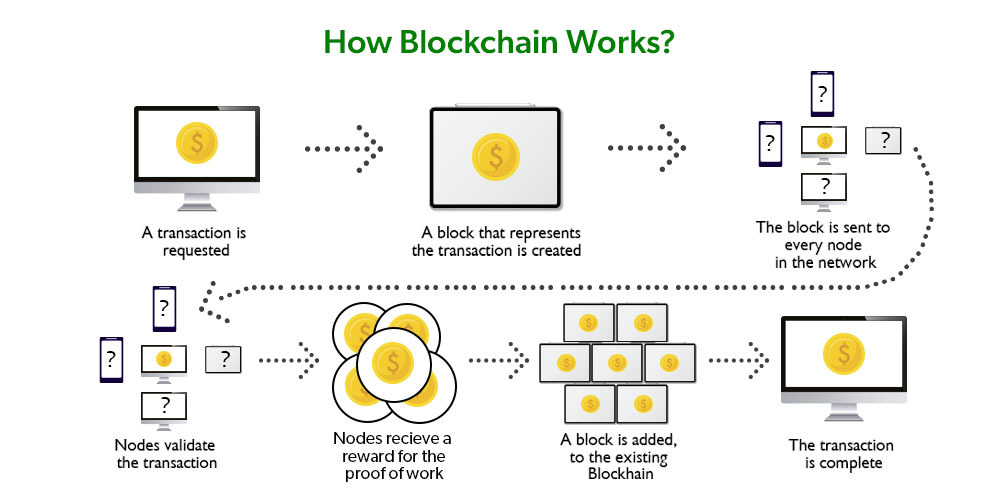
Cryptocurrency functions on blockchain infrastructure. When someone sends crypto, the transaction is verified by a decentralized network using consensus mechanisms such as Proof of Stake or Proof of Work. Once verified, the transaction is permanently recorded on the blockchain.
This process eliminates the need for banks or payment processors, enabling peer-to-peer transactions that are faster, more secure, and often more cost-effective. The combination of crypto and blockchain creates a system built on trustless verification, automation, and transparency.
Key Benefits of Crypto & Blockchain in 2026
The rapid adoption of these technologies is driven by powerful advantages:
- Enhanced Security – Advanced encryption protects user data and transactions.
- Greater Transparency – Public ledgers increase trust and reduce fraud.
- Lower Transaction Costs – Eliminating intermediaries reduces fees.
- Financial Inclusion – People without access to banks can participate in the digital economy.
- Smart Contracts Automation – Agreements execute automatically when conditions are met.
These benefits make crypto and blockchain attractive for both startups and large enterprises.
Challenges and Risks

Despite their growth, crypto and blockchain technologies still face obstacles. Market volatility remains a major concern for investors. Additionally, regulatory uncertainty, cybersecurity threats, and lack of public awareness can slow adoption.
Energy consumption and scalability are also areas of improvement, though newer blockchain models are becoming more energy-efficient and sustainable.
The Future Outlook
Looking ahead, crypto and blockchain are expected to become even more integrated into everyday life. Governments are exploring Central Bank Digital Currencies (CBDCs), companies are adopting tokenized assets, and industries are implementing blockchain-based automation systems.
In 2026 and beyond, these technologies are shifting from speculative investments to foundational digital infrastructure that powers the modern economy.
| Update Area | Key Info (2026) |
|---|
| Market Trends & Outlook | Major platforms like Coinbase predict compounding growth in crypto adoption in 2026 with increasing interest in ETFs, stablecoins, and tokenization. |
| Price & Predictions | Analysts predict Bitcoin could potentially surge well past prior highs (e.g., forecasts above $150,000 by end of 2026), while capital shifts into altcoins and institutional holdings. |
| Blockchain Adoption Stats | Blockchain tech usage continues to grow globally, with hundreds of millions using decentralized systems across industries. |
| Security & Risk Events | A major DeFi hack at Step Finance saw roughly $40M worth of crypto stolen, highlighting ongoing security risks in the ecosystem. |
| Price Movement & Altcoins | Crypto markets show mixed short-term price movements for key tokens like XRP and Solana — reflecting volatility. |
| Blockchain Regulation & Policy | Governments are advancing clearer regulatory frameworks globally, including stablecoin laws and compliance momentum in key markets. |
| Institutional Adoption | Institutional trading volumes and crypto holdings are expanding, with more institutional participation beyond Bitcoin and Ethereum. |
| Stablecoin Integration | Stablecoins are experiencing major growth and positioning as low-cost digital payment infrastructure, similar to mainstream financial rails. |
#CryptoNews #BlockchainTechnology #Cryptocurrency #Carrerbook #Anslation #Bitcoin2026 #Ethereum #DeFi #Web3 #DigitalFinance #CryptoTrends #BlockchainInnovation